Da Nang City Vietnam: The Ultimate Travel Guide 2026
Da Nang city Vietnam has arrived — and if you’re flying here from Bangkok in 2026, you are making one of the smartest travel decisions in Southeast Asia. Not because some travel magazine said so. Because I’ve watched this city transform over the past two decades from a quiet coastal town into the most livable, most visitable, most genuinely exciting destination in all of Central Vietnam. And for travelers based in Thailand, the math is almost too good: under two hours from Suvarnabhumi on a VietJet or AirAsia flight, direct to Da Nang International Airport (DAD), and you land in a place that delivers beaches, mountains, UNESCO heritage, and world-famous landmarks all within thirty kilometers of each other.
Let me be upfront about something before we get into the guide proper. Thai passport holders enjoy a 30-day visa-free exemption for Vietnam under the ASEAN bilateral agreement — so if you’re Thai, you walk straight through immigration. Expats living in Bangkok on foreign passports? You need the 90-day Vietnam E-visa, applied online before you board. The airline’s ground handling at BKK is strict; they check visa status at check-in, not at the gate. Get that sorted first, then focus on packing.
Da Nang City Vietnam: The Ultimate Travel Guide 2026
Why Da Nang in 2026 — Not Phuket, Not Bali
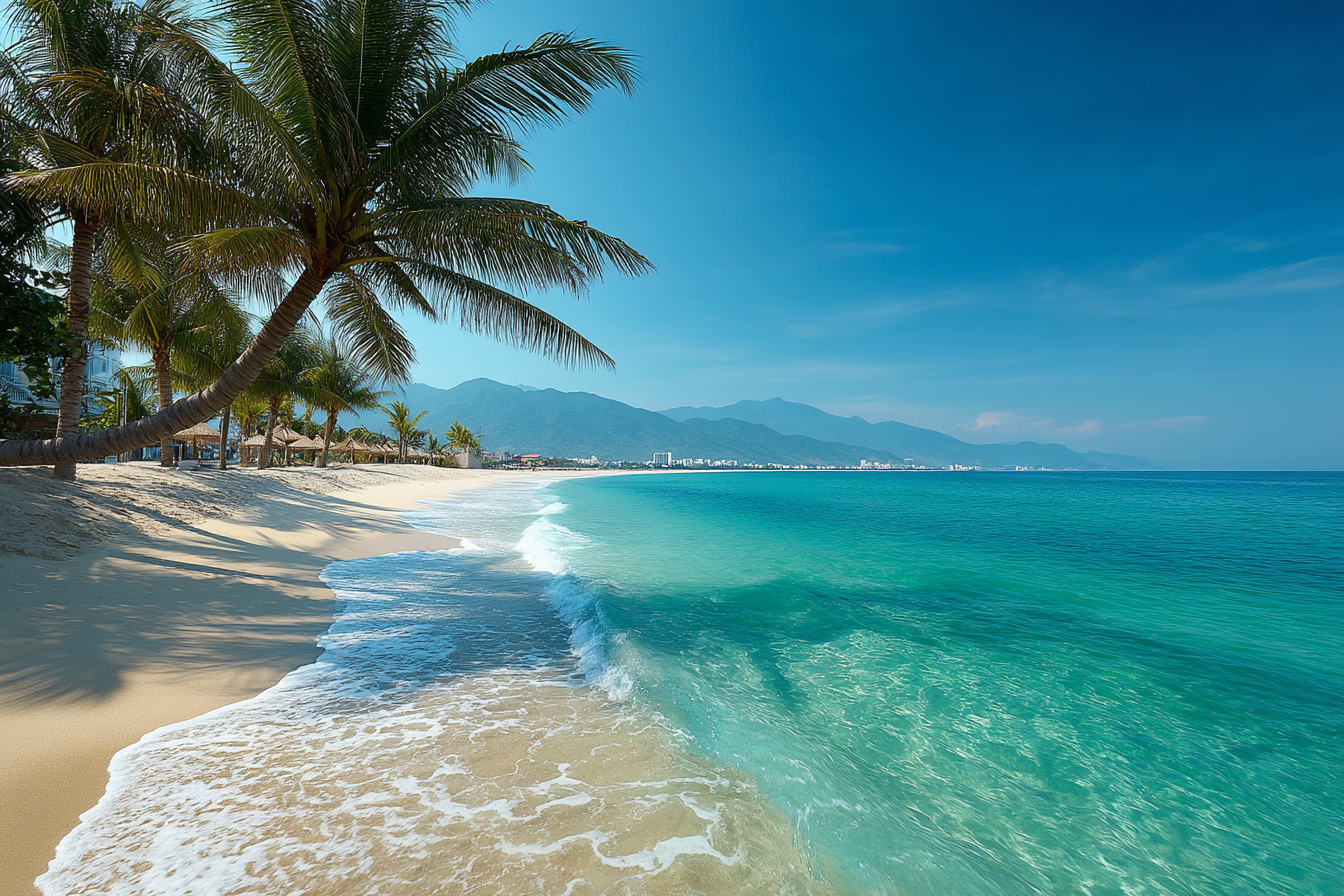
Every year I meet travelers who’ve been cycling through the same three beach destinations since 2018, wondering why each trip feels identical. Da Nang breaks that cycle. It doesn’t look or feel like anywhere else in the region. The coastline is twenty kilometers of fine white sand — My Khe Beach, flagged by Forbes as one of the planet’s most beautiful beaches — running parallel to a rapidly modernizing city skyline. Behind the city, the Truong Son Mountains rise dramatically, still green, still wild. The Son Tra Peninsula juts into the South China Sea, home to the endangered red-shanked douc langur and a white-marble Lady Buddha statue so large she’s visible from the ocean.
And then there’s the Golden Bridge.
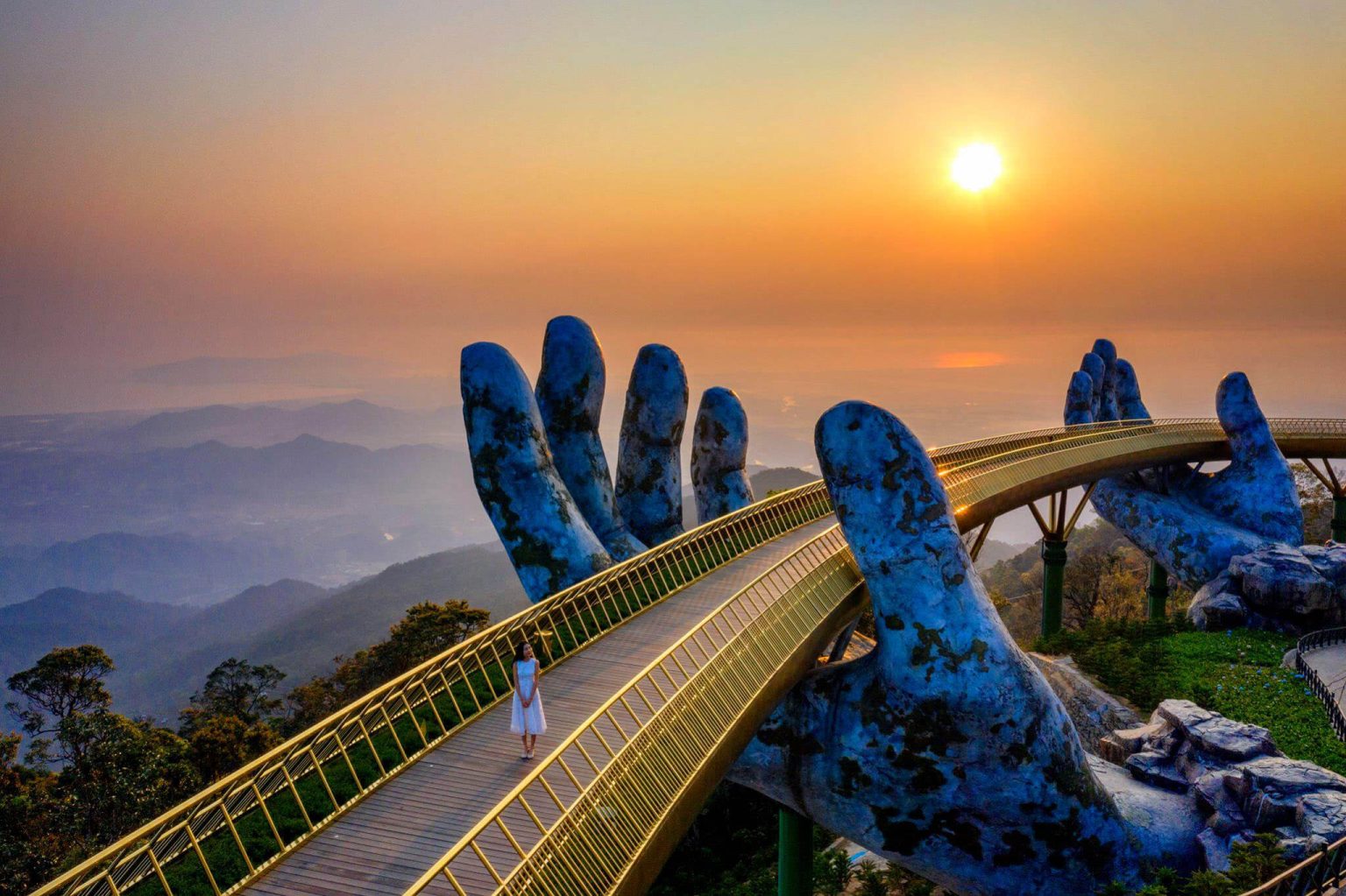
You’ve seen the photo. Two giant stone hands — moss-covered, almost ancient-looking despite being opened in 2018 — cradling a pedestrian walkway 1,400 meters above sea level in the Ba Na Hills. It’s the most photographed spot in Vietnam right now, possibly in all of Southeast Asia, and the image still doesn’t fully prepare you for standing there in the morning mist with clouds literally moving beneath your feet. I’ve accompanied hundreds of clients to Vietnam over two decades. This one gets people every time.
Da Nang city Vietnam rewards travelers who treat it as more than a beach stopover. It rewards the ones who take the half-day drive to Hoi An, who wake up early for the sunrise langur walk on Son Tra, who stay for a Dragon Bridge fire show on a Saturday night and end up sharing bánh mì with locals until midnight.
Getting to Da Nang from Bangkok
The flight corridor between Bangkok and Da Nang is busier than ever in 2026. From Suvarnabhumi (BKK), direct flights operate daily on Thai Airways, VietJet Air, and Bangkok Airways. Flying time is approximately 1 hour 50 minutes — shorter than Bangkok to Chiang Mai by road. From Don Mueang (DMK), AirAsia runs budget routes that occasionally go as low as 800 baht one-way if you’re flexible on timing and book well in advance.
Da Nang International Airport (DAD) sits just 3 kilometers from the city center — one of the most convenient airport-to-city distances in Asia. A metered taxi to the beachside hotel strip on My Khe takes around 10 minutes and costs approximately 80,000–100,000 VND (roughly 120–150 baht). Grab is available and recommended for transparent pricing. There’s no train or metro, but the city is compact enough that a single base near My Khe Beach puts you within reach of everything.
Important for non-Thai passport holders: If you hold a foreign passport and live in Thailand, you must select Da Nang International Airport (DAD) as your entry port when applying for the E-visa. This cannot be fixed at the airport. Selecting the wrong entry port — say, Hanoi (HAN) or Ho Chi Minh City (SGN) — means the airline cannot check you in, even if the rest of your visa is valid. It’s a port-specific system. Triple-check it before you submit.
Da Nang’s Top Attractions: The Real List
Ba Na Hills and the Golden Bridge
Thirty kilometers west of the city, Ba Na Hills rises into the Truong Son Mountains and seems, at times, to exist in a completely different climate zone from the beach below. The cable car ascent — one of the longest non-stop single-track cable car runs in Asia at over 5 kilometers — takes you above cloud cover, past waterfalls and dense canopy, to a hilltop resort complex that somehow manages to feel both surreal and magnificent.
The Golden Bridge, a 150-meter pedestrian span supported by those iconic oversized stone hands, has become the defining image of Vietnam’s tourism boom. Sunrise visits are the play: arrive by cable car opening time, walk the bridge in early light before the tour groups arrive, and you’ll have it almost to yourself. By 9:30 AM on a weekend, it’s shoulder-to-shoulder. The French Village section of the resort — cobblestoned squares, European architecture, flower gardens — is genuinely charming and makes for a good two-hour wander before the midday heat sets in.
My Khe Beach
Twenty kilometers of white sand, a gentle surf break, warm water, and a complete absence of the commercial overdevelopment that has gradually choked similar beaches in Thailand. My Khe is spacious. Even on a busy June weekend it never feels cramped. The beach is fronted by a string of mid-range hotels and seafood restaurants where you eat with your feet practically in the sand — fresh grilled tiger prawns for around 200,000 VND, local beer for 15,000. The northern stretch, near the An Thuong tourist area, is where most expats and digital nomads base themselves. The southern stretch, near the luxury resort corridor, is where you go when you want a sun lounger and someone to bring you cocktails.
Swimming conditions are ideal from March through August. From September through November, swells increase and typhoon risk is real — this is not the time for a beach-focused trip to Central Vietnam. Plan accordingly.
The Dragon Bridge
Every Saturday and Sunday night at 9 PM, the Dragon Bridge breathes fire and water. Not metaphorically. A functioning flame-throwing, water-spraying mechanical dragon stretches 666 meters across the Han River, and when the show runs, the riverside fills with thousands of people — locals, tourists, street food vendors, motorbike taxis — creating the kind of chaotic, joyful, genuinely alive atmosphere that Central Vietnam does better than anywhere.
The Dragon Bridge is free to watch. Position yourself on the east bank, facing west, for the best view. Arrive by 8:30 to secure a good spot. If you’re there mid-week, the bridge is still beautiful lit up at night — just without the pyrotechnics.
The Marble Mountains (Ngũ Hành Sơn)
Five marble and limestone peaks rise from flat ground about 9 kilometers south of the city center, riddled with Buddhist shrines, hidden caves, and pagodas that have been there for centuries. The climb to the summit of Thuy Son — the most accessible and rewarding of the five — takes about 20 minutes and delivers panoramic views over Da Nang city, the beach coastline, and the mountains stretching south toward Hoi An. Inside the caves, shafts of light fall through natural openings in the rock and illuminate centuries-old stone carvings. It’s genuinely dramatic.
Marble carving workshops surround the base of the mountains — the region has produced stone sculpture for export for generations, and you can watch artisans at work and buy pieces ranging from tiny souvenirs to full garden statues.
Son Tra Peninsula and the Lady Buddha
The Son Tra Peninsula curls into the South China Sea north of the city, covered in what remains of original jungle. The 67-meter Lady Buddha statue at Linh Ung Pagoda sits at the southern tip, facing the sea — the idea being that she watches over the fishing boats and protects the sailors. The pagoda itself is serene, the views extraordinary, and if you go very early in the morning (5–6 AM), you have a genuine chance of spotting red-shanked douc langurs in the forest above the road. They’re listed as endangered; seeing them wild, in their actual habitat, is a rare thing.
Hoi An Day Trip — The Ancient Town, 30 Minutes Away
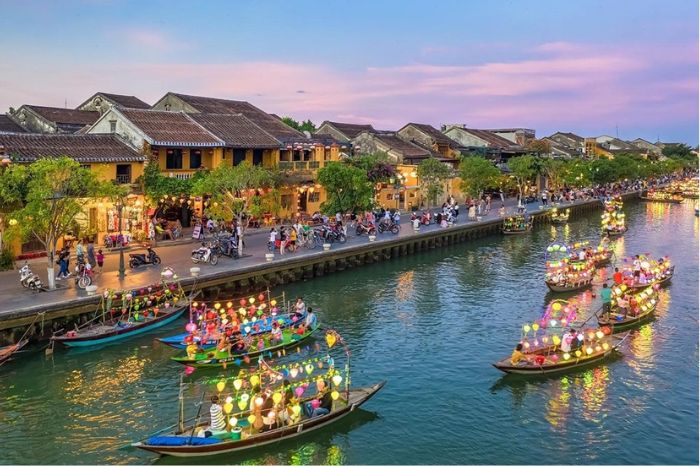
This deserves a separate guide, and we have one. But briefly: Hoi An is 30 kilometers south of Da Nang, accessible by taxi, motorbike, or day-trip vehicle in 40 minutes. The Ancient Town is a UNESCO World Heritage Site — Chinese merchant houses, Japanese covered bridges, French colonial facades, all compressed into a car-free pedestrian zone that glows gold in the afternoon. The weekly lantern release on the Thu Bon River is on the 14th of each lunar month. Tailor shops line every street; a custom-made linen shirt runs 400,000–600,000 VND and takes 24–48 hours.
Don’t skip Hoi An because you assume it’ll be crowded. Go early, go on a weekday, and find the streets behind the main tourist drag where local life continues at its own pace.
Best Time to Visit Da Nang from Bangkok
The honest answer, without hedging: February through May is the sweet spot. Temperatures sit comfortably between 22–30°C, rainfall is minimal, the sea is calm and clear, and the tourist crowds are lighter than summer peak. For Thai travelers used to humidity, the Da Nang dry season will feel immediately comfortable.
June through August brings hotter temperatures (peaking at 33–35°C) and higher humidity, but also the Da Nang International Fireworks Festival — DIFF 2026 runs from May 30 through July 11, with the theme “Da Nang – United Horizons.” If fireworks competitions between nations are your thing, this event draws serious crowds and serious spectacle. Book accommodation well in advance.
September through November is typhoon season. Flights get disrupted, beaches close for days at a time, flooding is possible in low-lying areas. I’ve seen it derail carefully planned trips completely. If your dates are fixed and fall in this window — buy comprehensive travel insurance, have flexible booking terms, and prepare mentally for itinerary changes.
December and January are cool by Da Nang standards (18–24°C), genuinely pleasant for walking and sightseeing, but slightly chilly for swimming.
Where to Eat in Da Nang: The Local Short List
Da Nang has its own culinary identity that gets overlooked because Hoi An and Hue dominate most food conversations about Central Vietnam. Don’t make that mistake.
Mì Quảng is the dish you eat here. A turmeric-yellow rice noodle base with pork, shrimp, peanuts, fresh herbs, and a small amount of thick, savory broth — not a soup, more of a dressed noodle. It’s everywhere, it costs 35,000–50,000 VND at a proper local spot, and it’s one of the most underrated bowls in all of Vietnamese cuisine.
Bánh xèo — the sizzling crispy crepe stuffed with shrimp, pork, and bean sprouts, wrapped in rice paper with fresh greens and dipped in nuoc cham — is everywhere along the riverside. Find a place with plastic tables on the sidewalk and order without hesitation.
For seafood, head to the stretch of restaurants just back from My Khe Beach near Bắc Mỹ An. No menus in English, prices written on whiteboards, fish picked straight from the tank. This is where Da Nang eats seafood, not the tourist strip.

Vietnam Visa: What Travelers from Bangkok Need to Know
Vietnam Visa: What Travelers from Bangkok Need to Know
Since so many Da Nang visitors are departing from Bangkok, let me close with the practical visa situation — because it catches people off guard more than any other part of trip planning.
Thai passport holders: 30-day visa-free entry, no application needed. Just a valid passport with at least 6 months remaining validity.
All other nationalities resident in Thailand: You need the 90-day Vietnam E-visa before you fly. Apply online a minimum of 4–5 days before departure for standard processing. If your flight is within 24–72 hours, emergency processing (2–4 hours) is available. Select Da Nang International Airport (DAD) as your entry port — not Hanoi, not Saigon, unless that’s actually where you’re landing.
The E-visa is valid for 90 days, single or multiple entry. Multiple entry is the smarter choice if your itinerary includes any movement across borders — Cambodia, Laos, a quick back-and-forth.
One thing I want to stress: the Vietnam Embassy in Bangkok on Wireless Road does not issue same-day tourist E-visas. Their consular counter handles official paperwork — work visas, notarization, consular legalization. For a tourist E-visa, the entire process is online. There is no physical application to make.
💡 Expert Insight from Stanley Ho: “Over my 23+ years handling travel logistics and Vietnam visa services, the most frequent disruption occurs at the check-in desk due to simple application formatting errors. If you are stuck at the airport and denied boarding, don’t panic — our emergency team can secure a new E-visa clearance through priority channels within hours, saving your flight.”
Skip the Immigration Queue: VIP Fast-Track at Da Nang Airport
When you land at Da Nang (DAD) during peak season — June through August, long weekends, Songkran travel spikes — the standard immigration line moves slowly. Sometimes very slowly. The VIP Airport Fast-Track service pairs a personal concierge who meets you at the aircraft door, escorts you through a priority immigration lane, and has you in a taxi before most passengers have located their gate exit.
It’s available at all major Vietnam entry airports: DAD (Da Nang), SGN (Ho Chi Minh City), HAN (Hanoi), CXR (Cam Ranh / Nha Trang), and PQC (Phu Quoc). For a weekend trip where you land Friday evening and leave Sunday afternoon, saving 45 minutes at immigration on both ends is not nothing.
Frequently Asked Questions
How many days do I need in Da Nang? Three to four days is the practical minimum to do Da Nang justice. Two days of city and beach, one day at Ba Na Hills and the Golden Bridge, one day in Hoi An. If you extend to five or six days, add the Hai Van Pass road trip (stunning coastal mountain pass north of the city), the Cham Museum (finest collection of Cham sculpture in the world, consistently undervisited), and a cooking class somewhere.
Is Da Nang safe for solo travelers from Bangkok? Yes, it’s among the safest cities in Southeast Asia for solo travel. Petty theft is rare. Scams targeting tourists are far less common than in Ho Chi Minh City or Hanoi. The usual sensible precautions apply — don’t leave bags unattended, use Grab for rides rather than hailing motorbike taxis. For solo female travelers specifically: My Khe Beach area at night is well-lit, well-trafficked, and comfortable.
What’s the currency situation — can I use Thai baht or cards? Vietnamese đồng (VND) only. ATMs are widely available throughout the city and at the airport. Credit cards are accepted at most hotels and mid-range restaurants; smaller local eateries and street food stalls are cash-only. Exchange rate at the airport is worse than in-city exchange counters — withdraw from an ATM or exchange at a bank in the city center. Current rate (May 2026): approximately 1 Thai baht = 875 VND.
Can I do a day trip to Hue from Da Nang? Yes, and it’s worth it. Hue is 100 kilometers north along one of Asia’s most scenic coastal highways. A day trip covers the Imperial Citadel, Thien Mu Pagoda, and the Royal Tombs. The drive over Hai Van Pass — a mountain col separating Da Nang from Hue with panoramic ocean views — is worth booking a private car just for that stretch. Allow 10–12 hours for the full day trip.
What’s the 2026 Da Nang International Fireworks Festival schedule? DIFF 2026 runs from May 30 through July 11, 2026 with the theme “Da Nang – United Horizons.” Competing national teams launch shows from the Han River on designated weekends. Ticket prices for grandstand seating range from 150,000–500,000 VND. The free riverside viewing zones are large and fill up fast — arrive 90 minutes early if you want a decent position.
About the Reviewer: Stanley Ho is the CEO of VisaOnlineVietnam and a recognized expert consultant in the international aviation and travel service industry. With 23+ years of experience in travel logistics and Vietnam visa services, Stanley and his team specialize in providing seamless visa solutions, fast-track airport services, and emergency travel assistance for global citizens visiting Vietnam.