How to Get an Emergency Vietnam Visa in 2026: The Only Guide That Actually Works Under Pressure
The emergency Vietnam visa is not a product you browse for on a quiet Tuesday afternoon. By the time you’re searching for it, something has already gone wrong — and you’re looking at a clock, a flight departure time, and a gap between those two numbers that is shrinking by the minute. I’ve been in this business for over twenty years. I know what it feels like to receive a call at 4am from a traveler standing in the departure hall at Suvarnabhumi or Dubai International, bags checked, boarding pass in hand, and a visa document that the check-in system just rejected. That’s the moment this guide was written for.
Let me tell you what you actually need to know — fast, clearly, and without the padding.
The short version: yes, it is possible to secure a valid Vietnam E-visa in 2 to 4 hours through a priority processing channel. Not through magic. Not through “a bit of luck” as some websites will tell you. Through a legitimate, government-connected expedited service that operates 24 hours a day and has direct priority access to the Vietnamese immigration system. If you are in a genuine emergency right now, contact our team immediately and skip to the application section below. If you have a few minutes and want to understand the full picture — what causes these situations, what the realistic timelines are, and how to avoid being here a second time — read on.
How to Get an Emergency Vietnam Visa in 2026: The Only Guide That Actually Works Under Pressure
What Counts as a Vietnam Visa Emergency?
Not every urgent situation is the same, and understanding which category you’re in determines which solution applies to you. In twenty-plus years of handling these calls, the scenarios cluster into four distinct types.
Type 1 — The Application Error
You applied for the Vietnam E-visa in advance — good. The approval came through — also good. But the name on the visa doesn’t match your passport. Or the entry date is wrong. Or the entry point you listed doesn’t match your actual flight routing. This is by far the most common emergency type, and it is entirely fixable with the right service. A corrected E-visa can be issued through priority channels in 2 to 4 hours. The catch: you need to identify the error before you get to check-in, not at check-in. If you’re departing in the next 24 hours, review your visa document against your passport right now — name field by name field, date by date.
Type 2 — The Forgotten Visa
You planned to apply. You meant to apply. Three weeks of work chaos later, your flight is tomorrow morning and you have no visa. This happens more than anyone admits, and it is not a disaster — provided you act within the window. An emergency E-visa application submitted to a priority processing service during Vietnam business hours (approximately 8am to 5pm, GMT+7) can realistically produce an approved visa within 2 to 4 hours. Submitted outside those hours, the window stretches. The earlier you call, the better your odds.
Type 3 — The Sudden Trip
A business deal closes unexpectedly. A family member in Vietnam needs you there. A conference opportunity materializes 48 hours before it begins. You didn’t plan to travel to Vietnam this week, and now you are. This is a legitimate emergency use case, and the E-visa system handles it — provided you have your documents ready and you move immediately. Every hour of delay in this scenario is a genuine risk.
Type 4 — The Airport Crisis
This is the high-pressure version. You are at the airport. Your flight departs in two, three, maybe four hours. Something is wrong with your visa — a processing error, a mismatch, a rejection flag from the airline’s check-in system. This is the situation that requires immediate contact with an emergency visa service, not a web search, not a phone queue, not an embassy voicemail that will be returned in three business days. Call directly. Now.

The Honest Truth About “1-Hour” Vietnam Visas
I want to be straight with you here, because there are websites out there that will promise you an emergency Vietnam visa in 60 minutes and charge a significant premium for it. Some of those promises are marketing. Some of them are outright false. Here is what the process actually looks like in 2026, without the theatrical framing.
The Vietnamese E-visa system is government-operated. No private service — not ours, not any competitor — has a direct override switch that forces the immigration system to approve a visa on demand. What legitimate emergency services do have is priority queue access: established relationships with government processing channels that allow urgent applications to move ahead of the standard three-business-day backlog. That priority access is real. The 2-to-4-hour window is real, under the right conditions.
Those conditions are: your documents are complete and correct, your application is submitted during active processing hours in Vietnam, there are no flags on your passport record, and the email address you provide actually works so the approval can reach you. When all of those conditions are met, 2 to 4 hours is a genuine and regularly achieved outcome. When any of them breaks down — blurry passport scan, name discrepancy in the application, submission at 2am Vietnam time — the clock extends. Not because we aren’t working. Because the system requires human review at the government level, and that review takes the time it takes.
One hour? Possible in ideal circumstances. Not a guarantee. Anyone who guarantees it unconditionally is selling you a promise they cannot keep.
How to Apply for an Emergency Vietnam Visa Right Now
If your situation is genuinely urgent, this is the section you need. Move through it quickly.
Step 1 — Gather your documents before you do anything else
The single biggest cause of delay in emergency visa processing is an applicant who contacts the service, starts the process, and then spends 20 minutes hunting for their passport or trying to get a usable scan. Every minute you spend doing that is a minute not spent in the processing queue. Before you make any call or fill any form, have these ready:
- Your passport — open to the bio-data page, face visible, chip visible
- A clear color scan or high-resolution photo of that bio-data page (taken in good light, no glare, all text legible)
- A recent passport-quality photo — white background, full face, no glasses
- Your intended entry date and the Vietnam entry point you’ll be using (airport name or IATA code)
- A working email address you can access in real time
Step 2 — Contact the emergency service directly
Go to VisaOnlineVietnam.com and use the Super Urgent Visa Service contact channel — not the standard application form, the emergency line. If you are at an airport right now, call directly. Do not submit a standard application and hope it gets prioritized. Standard applications go into the standard queue. Emergency processing requires you to explicitly engage the emergency channel.
Step 3 — Submit your application with zero errors
This is where most self-service applications fail under pressure. When you’re stressed and moving fast, typos happen. Transposed passport numbers. Wrong entry dates. Given name pasted into the surname field. In an emergency, one error doesn’t just delay your visa — it can invalidate the entire application and require a restart, which you do not have time for. Read every field twice before submitting. If your name contains any special characters, hyphens, or compound components — double-check against your physical passport page, not your memory of it.
Step 4 — Stay available
Once your application is in, stay on your phone and in your email. The processing team may need clarification on a document detail, a date, or a name field. A response that takes 15 minutes when you’re sitting in a lounge is a response that takes 15 minutes during processing. That’s fifteen minutes on a two-to-four-hour clock. Respond immediately to any contact.
Step 5 — Receive, verify, print
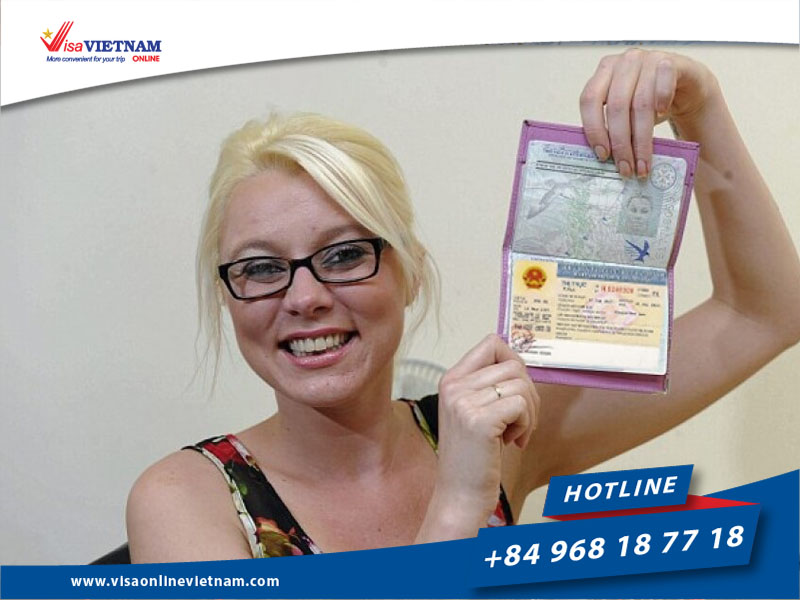
When the approved visa arrives by email, open it immediately. Check the name, passport number, entry date, and entry point against your physical passport and your flight details before you close the email. Print it. Save a digital copy. Have both accessible. Vietnam’s immigration counters accept either format, but having a printed backup at a high-pressure moment costs you nothing and could save you everything.
Why Emergency Visas Fail: The 5 Mistakes That Kill Applications
In two decades of emergency processing, I’ve seen the same mistakes repeat with depressing regularity. Here they are plainly, so you don’t make them.
Mistake 1 — Applying too late in the Vietnamese business day
Vietnam runs on GMT+7. If you’re in Europe, North America, or the Middle East, your “urgent” submission at 10pm your time may arrive in Hanoi at 2am, 4am, or 5am. Priority processing still requires human government-side review, and that review happens during working hours. The practical implication: if your flight is more than 12 hours away, submit now regardless of your local time. If your flight is within 6 hours and it’s the middle of the Vietnamese night, you are in the hardest possible window and you need to say so explicitly when you contact us.
Mistake 2 — Blurry or unreadable document uploads
A passport scan taken on a phone under bad lighting, with the page curling, glare across the data fields, or the laminate producing a white-out reflection — that scan fails automated document verification and kicks the application to manual review. Manual review takes longer. In an emergency, longer is the one thing you cannot afford. Scan in good light, flat surface, no glare, full page visible.
Mistake 3 — Name mismatches between application and passport
Your name on the E-visa must match your passport exactly — not approximately, not close enough. Exactly. If your passport reads NGUYEN THI HONG NHUNG and you type NGUYEN HONG NHUNG in the application because you forgot the middle element, the visa is issued wrong and will be flagged at the airline check-in counter. Check every component of your name. Every one.
Mistake 4 — Wrong entry point selected
The Vietnam E-visa requires you to declare your entry point during application. If you select Noi Bai (HAN) but your flight arrives at Tan Son Nhat (SGN), the visa will show the wrong entry point, and depending on the immigration officer, this can cause a secondary screening or refusal. Check your flight booking. Confirm the arrival airport. Select the correct one in the application.
Mistake 5 — Using an unreliable service because of a lower price
In an emergency, the priority is outcome, not saving $20. There are dozens of websites offering emergency Vietnam visa processing, and the quality difference between them is enormous — in responsiveness, in government channel access, in whether someone actually picks up at 3am when your flight is at 6am. Choose a service with a verifiable track record, real customer support, and a 24/7 contact channel. The visa fee is irrelevant if the service fails.
VIP Fast-Track: Solving the Airport Problem After the Visa Problem
Emergency situations don’t always end when the visa arrives. I’ve had travelers receive their approved E-visa 90 minutes before departure and then face a 45-minute immigration queue on landing in Ho Chi Minh City. You solved the visa crisis. You don’t want to add an immigration queue crisis on the other end.
VIP Fast-Track airport service provides priority immigration lane access at all three of Vietnam’s main international gateways: Noi Bai (HAN) in Hanoi, Tan Son Nhat (SGN) in Ho Chi Minh City, and Da Nang International (DAD). A personal concierge meets you at arrival, guides you directly past the standard queue, and stays through baggage collection. It can be arranged in advance or — for genuine emergencies — on very short notice. If your trip has already been one crisis, this is the service that makes sure the arrival end goes smoothly.
Frequently Asked Questions
Can I really get a Vietnam E-visa in 1 hour in 2026? Under ideal conditions — documents complete and correct, application submitted during Vietnam business hours, no flags on the passport record, active emergency service engaged — a 2-to-4-hour approval window is genuinely achievable. One hour is theoretically possible but not a guaranteed outcome. Anyone promising a 60-minute guarantee unconditionally is overstating what the system allows. Our Super Urgent Visa Service targets the 2-to-4-hour window and achieves it consistently when the application conditions are met.
What is the difference between the standard E-visa and an emergency Vietnam visa? There is one E-visa product — the 90-day Vietnam E-visa, single or multiple entry. What differs is the processing track. Standard processing takes approximately 3 business days. Emergency or Super Urgent processing, submitted through a priority government channel, compresses that to 2 to 4 hours. The visa document you receive is identical; only the speed of issuance differs.
What if the Vietnamese embassy or consulate is closed? This is precisely why the online E-visa system exists, and why emergency online processing services matter. Embassies and consulates operate during business hours on weekdays and are closed on Vietnamese public holidays. Emergency E-visa processing through an online priority channel operates 24 hours a day, 7 days a week — including holidays, weekends, and the middle of the night. Embassy hours are irrelevant to the E-visa process.
Can I get an emergency Vietnam visa at the airport on arrival? The old Visa on Arrival approval letter system — where travelers received a letter before departure and collected a physical stamp at the airport immigration desk — is completely dead and no longer a legal entry pathway in 2026. Do not attempt this route. There is no walk-up visa counter at Vietnamese airports for travelers who arrive without a valid visa. The E-visa must be approved and in your possession before you board.
How much does an emergency Vietnam visa cost? The base E-visa fee is USD $25 for single entry and USD $50 for multiple entry, payable directly to the government portal. Emergency processing through a priority service carries an additional service fee that varies by provider and turnaround time — typically ranging from USD $50 to USD $150 depending on urgency. The total cost is meaningful but not prohibitive relative to the cost of a missed flight or a cancelled trip.
About the Reviewer: Stanley Ho is the CEO of VisaOnlineVietnam and a recognized expert consultant in the international aviation and travel service industry. With decades of experience navigating complex immigration regulations, Stanley and his team specialize in providing seamless visa solutions, fast-track airport services, and emergency travel assistance for global citizens visiting Vietnam.