Phu Quoc Island Guide 2026: Vietnam’s Best Beach for Thai Visitors
If you’re sitting in Bangkok right now trying to decide between Bali, Phuket, and somewhere new — let me make the case for Phu Quoc. The phu quoc things to see list in 2026 is longer, more varied, and more genuinely surprising than almost any island destination in Southeast Asia at this price point. Turquoise water that rivals the Maldives. A world-record cable car that floats you above open ocean to a private island. Pepper farms that smell like nothing else on earth. Fish sauce so good it has a geographical indication, like Champagne. And — for Thai passport holders especially — you walk straight through immigration without a visa. No application, no fee, no waiting. Just land at Phu Quoc International Airport (PQC), clear the counter, and within minutes you’re in a taxi heading toward a beach that doesn’t look real.
I’ve been sending clients from Bangkok to Phu Quoc for years. The conversation used to require convincing. These days? Nobody needs convincing. The island transformed. There’s a JW Marriott on the beach. There’s a theme park that rivals anything in Thailand. And somewhere between the five-star resorts, the original Phu Quoc still exists — empty northern beaches, wooden fishing villages, pepper farms run by the same families for four generations. This guide covers both versions.
Phu Quoc Things to See 2026: Vietnam’s Best Beach for Thai Visitors
Phu Quoc Things to See: The Definitive Attraction List
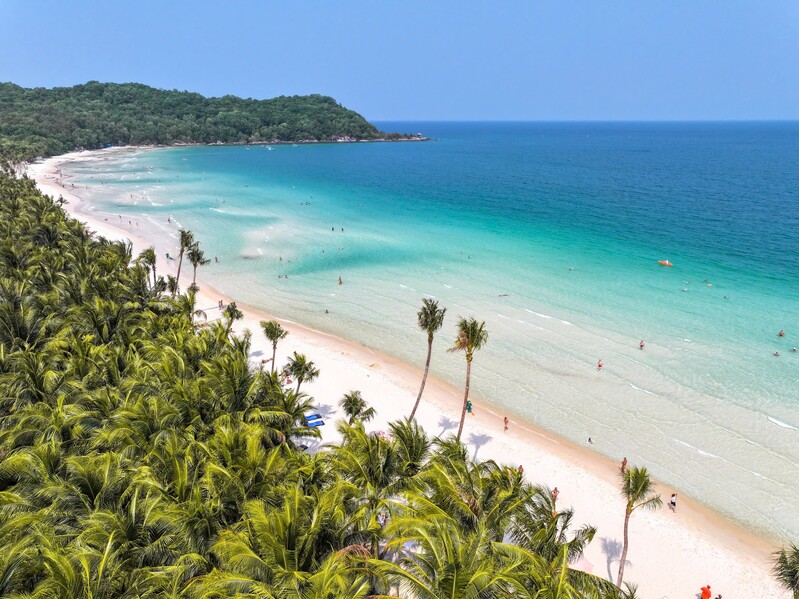
Sao Beach — the one photograph you’ll send home immediately
Sao Beach (Bãi Sao) is on the southeast coast, about 28 kilometers from Duong Dong town. The water is so clear you can read the sand patterns from a boat twenty meters offshore. It’s a postcard that moves. The beach curves in a gentle arc, the trees lean over at the right angle, and the Gulf of Thailand sits flat and brilliant in the dry season sun. Every single traveler I’ve sent here has texted me the same photo within two hours of arriving.
Get there early — by 10 AM the beach clubs are setting up and the day-trippers start arriving. At 7:30 in the morning, you might have the entire stretch to yourself. The seafood restaurants along the back of the beach open by 9 AM and serve the morning catch with rice for under 100,000 VND. Eat there. Don’t wait until lunch.
Hon Thom Cable Car — the world’s longest sea-crossing cable car
Nearly 8 kilometers of cable stretched above open ocean, running from An Thoi Station on the southern tip of Phu Quoc to Hon Thom Island. The cabins climb to 174 meters above the water. The views — islands scattered across turquoise sea, fishing boats drifting below, the coastline of Phu Quoc behind you receding into green hills — are the kind that make people go quiet in the middle of sentences. It holds a Guinness World Record as the longest three-wire sea-crossing cable car on the planet, which means something when you’re up there looking down.
On the other side, Sun World Hon Thom Nature Park has a water park, snorkeling, kayaking, and a seafood buffet that genuinely earns its price. Return cable car tickets run approximately 600,000 VND. If you’re only doing one paid activity on Phu Quoc, make it this one.
Sunset Town and Grand World — the island after dark
Sunset Town sits on the island’s western coast, built specifically around the phenomenon of watching the sun drop into the Gulf of Thailand. The Kiss Bridge, the Kiss the Stars water music show, the evening light shows — it’s been called theatrical, and it is, completely unapologetically so. The Grand World complex nearby is open late, lined with restaurants, entertainment venues, and cafés that operate until well past midnight. It’s sometimes called “the city that never sleeps” because of how many shows and restaurants run until late. For Thai travelers who enjoy the energy of a night scene, Sunset Town delivers in a way that the rest of the island doesn’t.
Starfish Beach — the Caribbean scene nobody expected
On the northern coast near Ganh Dau, Starfish Beach is exactly what it sounds like. In shallow waters, you can see dozens of bright red starfish against white sand, with wooden piers extending over clear water that creates an almost Caribbean picture. Access is free. It’s a 45-minute motorbike ride from Duong Dong town, through the national park road — the drive alone is worth it, through jungle canopy that blocks the heat and lets filtered light through. Bring water. The beach stalls are basic.
Phu Quoc National Park — 70% of the island, still wild
Most of the northern and central island is protected national park. The trails are not well-marked, the paths are not paved, and that’s the point. Guided treks into the interior go past streams, old-growth forest, and the occasional troop of macaques. For Thai visitors who’ve done every managed nature walk in Thailand twice over, the rawness of Phu Quoc’s national park is a genuine change of register. No entrance queues. No gift shop at the summit. Just jungle.
Phu Quoc Pepper Farm — buy it here, not at the airport
Phu Quoc pepper is famous, and buying direct from a farm gets you 500g for around 150,000 VND versus 300,000 VND in tourist shops. The farms are open to visitors, usually for free entry. You’ll see the whole process — the vine-climbing pepper plants, the drying racks, the different processing stages for black, white, and red pepper from the same plant. Bring cash. The family operations don’t have card machines, and they shouldn’t need them.
VinWonders and Vinpearl Safari — a full day with family
VinWonders Phu Quoc is a world-class theme park with rides and entertainment, while Vinpearl Safari is the country’s largest wildlife conservation park. Together they justify a full day, especially for travelers with children. Entry is approximately 600,000–800,000 VND each; combo tickets save around 250,000 VND per person. Located in the north of the island, close to Long Beach. The safari section has free-roaming animals across a large open area — genuinely impressive by regional standards.
The Phu Quoc Night Market (Dinh Cau Market)
Every evening in Duong Dong town, the Dinh Cau night market assembles along the river and the smell reaches you before the lights do. Grilled squid, fresh tiger prawns cooked six different ways, nem cuốn, local fruit, Phu Quoc fish sauce being bottled on the spot. Prices are honest — 150,000 to 400,000 VND per person for a full seafood dinner if you know what to order (ask for the day’s catch, not the menu). Thai visitors tend to feel immediately at home in a market environment like this. The visual chaos, the smoke, the bargaining rhythm — it maps cleanly onto Bangkok’s night market culture.
Ham Ninh Fishing Village — the island that time left alone
Ham Ninh Fishing Village on the east coast is one of the oldest settlements on the island. The wooden houses on stilts extend over the water. Old boats are tied up at the jetty. Women mend nets on the dock in the morning. Oysters and shellfish are sold straight off the boats for 30,000–50,000 VND a portion. It’s not a tourist attraction in any formal sense — no entrance fee, no guided tour, no gift shop. It’s a working fishing village that happens to be extraordinarily beautiful, and the people are used to visitors who arrive respectfully and spend a little money on food.
Getting to Phu Quoc from Bangkok
Direct flights from Bangkok now operate to Phu Quoc International Airport (PQC), making it one of the easiest island destinations in Vietnam for Thai travelers to reach. Flight time is approximately 1 hour 40 minutes from Suvarnabhumi (BKK). VietJet and Bangkok Airways both operate this route in 2026; check for promotional fares, which occasionally drop to very competitive prices on advance booking.
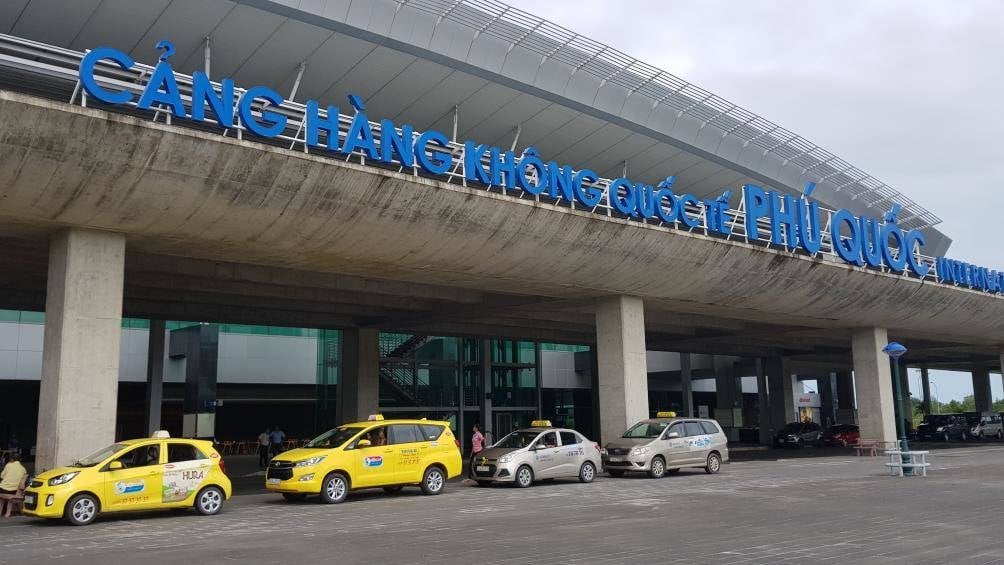
The airport is small and efficient. Grab is available for airport transfers; the ride into Duong Dong town takes around 15 minutes and costs 100,000–150,000 VND.
Getting to Phu Quoc from Bangkok
Visa Situation for Thai Visitors and Bangkok-Based Expats
Thai passport holders: No visa needed. The ASEAN bilateral exemption gives Thai nationals 30 days visa-free in Vietnam, Phu Quoc included. Your passport needs at least 6 months of validity remaining. That’s it.
Foreign nationals living in Bangkok: You need the 90-day Vietnam E-visa before you fly. Select Phu Quoc International Airport (PQC) as your entry port when applying — not Hanoi, not Ho Chi Minh City, not Da Nang. Vietnam’s E-visa is port-specific. Getting this wrong means the airline at Suvarnabhumi cannot issue your boarding pass. It happens, and it’s entirely avoidable.
Standard E-visa processing is three business days. If you’re booking last-minute and the flight is within 24–72 hours, emergency processing (2–4 hours) is available. The Vietnam Embassy in Bangkok on Wireless Road handles consular business and official documentation — not same-day tourist E-visas. Everything for tourist entry is done online.
💡 Expert Insight from Stanley Ho: “Over my 23+ years handling travel logistics and Vietnam visa services, the most frequent disruption occurs at the check-in desk due to simple application formatting errors. If you are stuck at the airport and denied boarding, don’t panic — our emergency team can secure a new E-visa clearance through priority channels within hours, saving your flight.”
Best Time to Visit Phu Quoc from Thailand
The best time to visit Phu Quoc is the dry season, from November to April, when sunny weather, calm seas, and clear water make it ideal for beach activities and water sports. For Thai travelers looking to escape Bangkok’s hottest months, November through February offers a particularly comfortable combination of Phu Quoc’s warmth (25–28°C) without the oppressive humidity of the Gulf of Thailand summer.
The wet season runs from May to October, with the wettest months being July to September. The upside: if you don’t mind occasional brief showers, the rainy season has fewer tourists and offers a more tranquil stay. Prices drop noticeably. Many luxury resorts run serious low-season promotions. The rain usually arrives in short afternoon bursts rather than all-day downpours, and the national park is at its lushest. It’s not a bad time to visit — just pack a light rain jacket and adjust expectations on sea conditions.
December and January are peak season. Book accommodation at least six weeks in advance.
Where to Stay: How to Choose Your Base
Phu Quoc’s geography matters for accommodation decisions. The island stretches 574 km², with attractions scattered from the north to the far south at Hon Thom — staying in the wrong area means burning time and money on transfers.
Long Beach (Bai Truong): The main strip on the west coast, close to Duong Dong town, the night market, and most mid-range dining. Best for travelers who want convenience and nightlife access. Budget to mid-range options run 800,000–2,000,000 VND per night.
Ong Lang Beach: Quieter, slightly north of Long Beach. Some of the best boutique eco-resorts on the island. Good for couples who want calm water and lower crowds without full isolation.
Khem Beach (southern tip): The resort beach. JW Marriott territory. Pristine, protected, beautiful — and a 40-minute taxi ride from everything else. Commit to this area only if you’re doing a full resort-style stay where the hotel itself is the destination.
Sunset Town (western coast): If the evening entertainment and the light shows are why you’re coming, staying here puts you in the middle of the action.
Food Worth Making Plans Around
Start with Phu Quoc fish sauce. Not as a condiment — as a subject. This island produces what serious cooks consider Vietnam’s finest nước mắm, aged in wooden barrels from the local anchovy catch, sometimes for twelve months or longer. The flavor is richer and more complex than factory-produced fish sauce, and the smell of the production facilities is something between overpowering and fascinating depending on your constitution. Factory tours are free or very cheap and take about 30 minutes.
At the Dinh Cau night market, order: grilled squid (mực nướng), blood cockles (sò huyết) cooked in tamarind and chili, and fresh sea urchin (nhum) if you see it on a day-boat — this last one is only reliably available in the dry season when diving conditions allow collection.
Ham Ninh Village for oysters: 30,000 VND for a pile of small, briny, perfect oysters eaten with a squeeze of lime. Do not skip this.
At the pepper farms, you can buy pepper-infused condiments, pepper tea (genuinely good — earthy and warming), and whole dried peppercorns to take home. The Phu Quoc black pepper is internationally recognized for its aromatic complexity. A 500g bag makes a better souvenir than anything sold at the airport.
Skip the Queue: VIP Fast-Track at Phu Quoc Airport
The VIP Fast Track service at Phu Quoc International Airport (PQC) lets you bypass immigration lines and begin your adventure immediately — particularly valuable for those staying at luxury resorts with pre-arranged activities. The service pairs a personal concierge who meets you at the aircraft, escorts you through the priority lane, and has you through the terminal before the main queue has formed. During peak December–February season, standard immigration at PQC backs up. Fast-track is also available at SGN (Ho Chi Minh City), HAN (Hanoi), DAD (Da Nang), and CXR (Cam Ranh / Nha Trang).

Skip the Queue: VIP Fast-Track at Phu Quoc Airport
Frequently Asked Questions
Do Thai citizens need a visa for Phu Quoc? No. Thai passport holders enter Phu Quoc visa-free for up to 30 days under the ASEAN exemption. No application, no fee — just a valid passport with at least six months remaining. Non-Thai passport holders living in Thailand need the 90-day Vietnam E-visa with Phu Quoc (PQC) selected as entry port.
How many days do I need in Phu Quoc? Four to five days is the ideal window. Day one: settle in, beach, night market. Day two: Hon Thom cable car and south island. Day three: north island — Starfish Beach, pepper farms, national park drive. Day four: slow day — spa, Sao Beach, Ham Ninh village. Day five (if you have it): Sunset Town evening experience and shopping in Duong Dong before your flight. Three days is workable but tight.
Is Phu Quoc more expensive than Phuket or Koh Samui? Generally cheaper, sometimes significantly so. A good mid-range resort room runs 1,500,000–3,000,000 VND (1,800–3,600 baht) per night. Street food and market meals cost 80,000–200,000 VND (100–240 baht). Entrance fees to major attractions are lower than comparable Thai parks. The main cost outlier is the Hon Thom Cable Car at ~600,000 VND — worth every baht.
Can I rent a motorbike to explore? Yes, and I recommend it. Motorbike rental is 150,000–200,000 VND per day, roads across the island are generally in good condition, and a motorbike gives you freedom that taxis and tour vans don’t. The road through the national park to Starfish Beach and Ganh Dau is particularly good. An international driving license is technically required but rarely checked. Drive on the right side of the road.
What’s the currency situation? Vietnamese đồng (VND) only. ATMs are available in Duong Dong town and near major resorts. Large hotels and restaurants take cards; markets, pepper farms, fishing villages, and small beach shacks are cash-only. Current rate (May 2026): approximately 1 Thai baht = 875 VND. Bring enough cash for a day or two out from ATMs before you head to remote areas.
About the Reviewer: Stanley Ho is the CEO of VisaOnlineVietnam and a recognized expert consultant in the international aviation and travel service industry. With 23+ years of experience in travel logistics and Vietnam visa services, Stanley and his team specialize in providing seamless visa solutions, fast-track airport services, and emergency travel assistance for global citizens visiting Vietnam. Read his full profile here.