The Complete Guide to Traveling to Vietnam in September 2026 — For Thai Travelers
If you’re a Thai traveler planning a Vietnam trip in September, let me tell you something the generic travel blogs won’t: this is quietly one of the best-kept secrets in Southeast Asian travel timing. September sits in that magical shoulder zone — past the peak summer crush, before the holiday crowds of October and November — and for Thai passport holders especially, the entry process has never been smoother. The vietnam visa for Thailand citizens situation is genuinely favorable right now, and the country itself in September is doing things that photographs simply cannot do justice to.
I’ve been running visa operations and travel logistics across Vietnam for over two decades. September sends a particular kind of traveler: people who’ve heard about the golden rice terraces of Mu Cang Chai, the lantern-lit evenings in Hoi An, the limestone drama of Ha Long Bay. People who want Vietnam without the shoulder-to-shoulder queues of July. This guide covers everything — weather, destinations, festivals, practical logistics, and exactly what your Thai passport gets you at the immigration counter.
1. Vietnam Weather in September: What to Actually Expect
Vietnam runs on three distinct climate personalities, and September plays out differently in each. Knowing which region you’re heading into changes everything about what you pack, where you stay, and how much flexibility you need in your daily plans.
Northern Vietnam — Hanoi, Sapa, Ha Giang, Mu Cang Chai
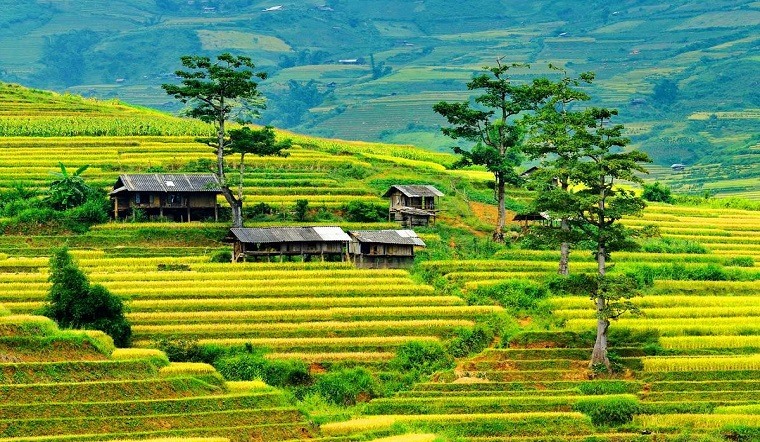
The north is at its absolute peak visual drama in September. Average temperatures sit between 25°C and 31°C in Hanoi — warm but not brutal, with a cooling breeze that starts creeping in during the final two weeks of the month. Rainfall is lighter than August. The Northern highlands — Sapa, Mu Cang Chai, Ha Giang — are seeing the rice terraces shift from green to gold as harvest season begins, a transformation that draws photographers from across Asia. Mornings are clear and crisp. Nights in the mountains drop to around 17°C; bring a light layer.
Central Vietnam — Da Nang, Hoi An, Hue, Phong Nha
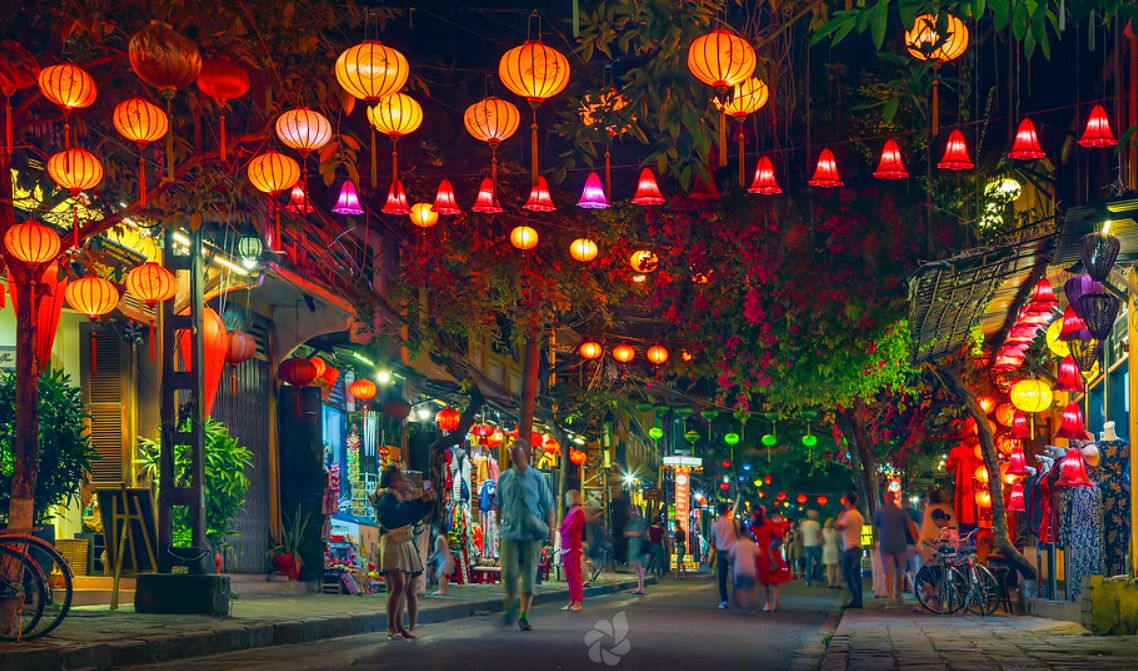
Central Vietnam in September is where you need to read the weather forecast carefully. Temperatures range from 25°C to 34°C, and while the first half of the month tends to be manageable, rainfall increases toward late September as the annual rainy season builds momentum. Da Nang beaches are still swimmable on clear days. Hoi An — UNESCO-listed, impossibly charming — is actually at its least crowded in September, which means you can walk the lantern-lit Ancient Town in something approaching peace. Phong Nha caves remain accessible and magnificent throughout the month.
Southern Vietnam — Ho Chi Minh City, Mekong Delta, Phu Quoc
The south is firmly in wet season in September: temperatures hover below 32°C, and you’ll get short, intense afternoon downpours that arrive, drench everything, and disappear within an hour. Ho Chi Minh City handles this with characteristic pragmatism — the city doesn’t slow down, it just gets wetter. The Mekong Delta in September is genuinely spectacular in its own way: annual flooding creates a vast, glittering waterscape perfect for boat trips, floating markets, and a kind of rural Vietnamese life that feels untouched.
2. Top Destinations to Visit in Vietnam in September
Mu Cang Chai & the Northern Rice Terraces
This is why September exists. The terraced rice fields of Mu Cang Chai — stacked up the mountain flanks in thousands of hand-cut steps — turn a deep, saturated gold as harvest season begins. The Hmong villages in the valleys below are alive with activity. La Pan Tan’s terraces catch the morning light in ways that make you put your phone down and just look. Combine with Ha Giang’s limestone karst loop for a northern Vietnam circuit that will rearrange your understanding of what a landscape can do.
Sapa
Sapa in September has limited rainfall, manageable temperatures, and that golden-hour atmosphere that makes every trekking photo look professionally lit. The terraced fields around Lao Cai are approaching harvest — deep green shifting to amber. Staying overnight in a local homestay and waking up above the cloud line is the kind of experience that Thai travelers consistently rank as the highlight of their entire Vietnam trip. Two to three nights is the minimum to do it properly.
Ha Long Bay
Still warm enough for kayaking and swimming, less crowded than peak summer, and the limestone islands look best in the soft September light when there’s a faint morning mist over the water. Cruises are more negotiable on price in shoulder season. Lan Ha Bay, immediately adjacent, offers virtually the same scenery with even fewer boats.
Hoi An Ancient Town
September in Hoi An is as close to a locals’ experience as you’ll get. The Japanese Covered Bridge doesn’t have a queue. The tailors have time for you. The restaurants aren’t packed at 7pm. And on the night of the full moon — when the lanterns go out along the Thu Bon River and the electricity is switched off in the Old Town — it feels like time has folded back two centuries.
Ninh Binh
Often called the inland Ha Long Bay, Ninh Binh’s karst limestone formations rise dramatically from flooded rice paddies. The Trang An complex — a UNESCO-listed network of caves and rivers navigable by wooden sampan — is extraordinary in any season, but the golden rice framing the limestone pillars in September makes it something else entirely. Bike along the valley roads at dusk and you’ll understand immediately why this region has been drawing Vietnamese painters for centuries.
3. September Festivals in Vietnam
Vietnam National Independence Day — September 2
This is a serious national celebration. Hanoi’s Ba Dinh Square hosts parades, military displays, and public gatherings that bring the city to a patriotic standstill. The flag-raising ceremony at dawn draws enormous crowds. For Thai visitors, it’s a fascinating window into Vietnamese national identity — the pride is genuine and the atmosphere is electric. Book accommodation in Hanoi well in advance if your dates overlap.
Mid-Autumn Festival (Tết Trung Thu) — date varies, typically mid-to-late September
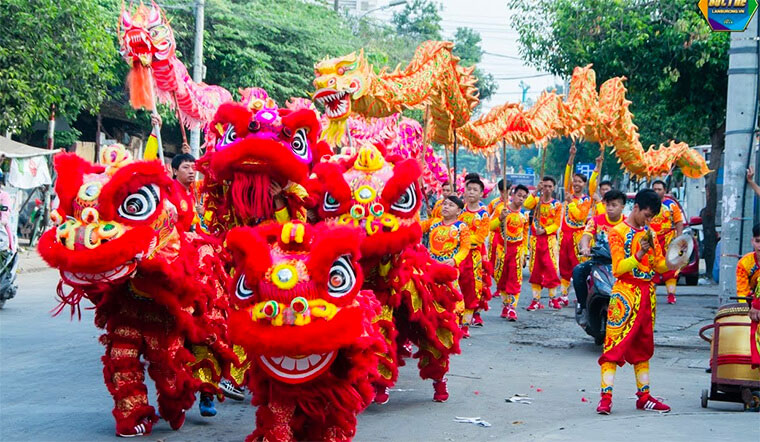
The Mid-Autumn Festival is the most visually spectacular event in the Vietnamese cultural calendar outside of Tết. Held on the 15th day of the eighth lunar month, it transforms every major city’s streets into a procession of lanterns, lion dances, mooncake vendors, and children in traditional costume. Hang Ma Street in Hanoi and Nguyen Hue Walking Street in Ho Chi Minh City are the epicenters. Hoi An, predictably, takes it somewhere extraordinary — the Ancient Town on Mid-Autumn Festival night is one of those travel experiences you describe to people for years afterward.
Do Son Buffalo Fighting Festival — late September, Hai Phong
Held on the 9th day of the eighth lunar month in Do Son district, Hai Phong, this centuries-old festival pits two buffaloes against each other in a ritual combat that draws spectators from across northern Vietnam. It’s intense, it’s ancient, and it’s completely unlike anything you’ll encounter at home.
4. Recommended September Itineraries for Thai Travelers
7 Days — The Golden North: Hanoi · Sapa · Mu Cang Chai · Ninh Binh
Built for the rice terrace photography crowd. Fly BKK–HAN, spend two nights in Hanoi, overnight train to Sapa for two nights in the highlands, down to Mu Cang Chai for two nights of pure terrace immersion, then south to Ninh Binh for a final night before flying home. This is the September itinerary for travelers who want one image that genuinely changes how they see the world.
7 Days — Culture Coast: Da Nang · Hoi An · Hue
Fly BKK–DAD. Base yourself in Da Nang for the beaches, day-trip to Hoi An’s Ancient Town (or better, move your base there for three nights). Cross the Hai Van Pass into Hue for the final two days — Imperial City, Royal Tombs, boat on the Perfume River, the best bún bò Huế you’ve ever eaten. Return from DAD or HAN via Hue’s Phu Bai Airport.
9 Days — North to South Classic: Hanoi · Ha Long Bay · Hoi An · Ho Chi Minh City
The full Vietnam sweep for first-timers. Hanoi entry (HAN), overnight cruise on Ha Long Bay, fly south to Da Nang and Hoi An, finish in Ho Chi Minh City (SGN). The Mekong Delta day trip from Saigon in September — floating market, flooded orchards, river sampan — is a bonus that the summer crowds tend to miss.
5. Do Thai Travelers Need a Visa for Vietnam in September?
Here’s the part that surprises most Thai travelers. The Vietnam visa for Thailand citizens situation is actually very favorable — and understanding it clearly will save you both time and money.
Thai passport holders benefit from a 30-day automatic visa exemption under the ASEAN bilateral agreement. You land at Noi Bai, Tan Son Nhat, or Da Nang International, present your Thai passport, and receive a 30-day stamp. No application, no fee, no waiting. For most of the 7 and 9-day itineraries above, this is all you need.
For the travelers among you planning an extended stay — two months backpacking north to south, a slow-travel approach through the highlands, or a working trip that happens to include Vietnam — the answer is the 90-day Vietnam E-visa. Single or multiple entry, applied for entirely online, processed in approximately 3 business days (or 2 to 4 hours on urgent track). The old Visa on Arrival approval letter system is completely dead and should not be used under any circumstances — it is no longer a legal entry pathway in 2026.
E-Visa Document Checklist:
- Thai passport valid for at least 6 months beyond your travel dates (minimum 2 blank pages)
- Digital passport-quality photo — white background, face clearly visible, recent
- Color scan of your passport bio-data page
- Valid email address for receiving approval
- International credit or debit card for payment
Critical note for Thai passport holders on name formatting: Thai romanized names on the Latin-script passport page can be long — occasionally long enough to overflow the e-visa portal’s character fields without displaying an error. Submit what appears to be a clean form, and the name on your visa arrives truncated. At immigration, the mismatch causes delays or secondary screening. Always manually count characters for both given name and surname fields before submitting, and cross-reference against your physical passport’s Latin-transliteration page exactly.
6. Denied Boarding at Suvarnabhumi? The Emergency Visa Solution
Not every disruption happens to the unprepared. I’ve seen meticulous travelers — people who applied two weeks early, double-checked everything — show up at the Thai VietJet or Bangkok Airways check-in counter at BKK or DMK with an e-visa that has a processing error buried in it. System flagged a document issue on the Vietnamese side. Flight in three hours.
If this happens to you: do not panic, and do not waste time in general customer service queues. Our Super Urgent Visa Service operates 24 hours a day, working directly through priority government channels to secure a new E-visa clearance in 2 to 4 hours. We’ve pulled this off at Suvarnabhumi more times than I can count. The moment you know there’s a problem, contact us immediately — every minute of delay narrows the window.
💡 Expert Insight from Stanley Ho: “Over my 20+ years handling travel logistics, the most frequent disruption occurs at the check-in desk due to simple application formatting errors. If you are stuck at the airport and denied boarding, don’t panic—our emergency team can secure a new E-visa clearance through priority channels within hours, saving your flight.”
7. VIP Fast-Track Immigration at Vietnam Airports
September is shoulder season, not off-season. Noi Bai and Tan Son Nhat both receive high passenger volumes on Bangkok–Hanoi and Bangkok–Ho Chi Minh City routes — and the standard immigration hall at SGN on a Friday evening is not something you want to encounter after a two-hour flight if you have dinner plans or a connecting transfer.
VIP Fast-Track gives you access to the priority immigration lane at all three major gateways: Noi Bai (HAN), Tan Son Nhat (SGN), and Da Nang International (DAD). A personal concierge meets you at arrival, guides you around the standard queue, and sees you through baggage collection. Available to Thai travelers using either the 30-day exemption or the 90-day E-visa. For families, business travelers, or anyone who wants September in Vietnam to start the moment the wheels touch down — this is the rational choice.
8. How to Apply for the Vietnam E-Visa in 2026
For Thai travelers whose September plans run longer than 30 days, here is the complete application process:
- Go to the official portal or visit VisaOnlineVietnam.com for guided support, document review, and urgent processing options.
- Enter your personal details — use your passport’s Latin-transliteration page exactly. Watch character limits for Thai names.
- Upload your photo and passport scan — color, clear, no glare on the laminate.
- Choose single or multiple entry — if your September itinerary includes side trips to Cambodia or Laos, choose multiple entry.
- Pay and submit — standard: 3 business days. Urgent: 2 to 4 hours.
- Receive approval by email — print it or save digitally. Vietnam’s immigration counters accept both.
Frequently Asked Questions
Do Thai citizens need a visa to visit Vietnam in September 2026? For stays of 30 days or less, no visa is required — Thai passport holders enter under the ASEAN bilateral exemption. Just present your valid passport at immigration. For stays beyond 30 days, apply for the 90-day E-visa online before travel.
Is September a good time for Thai travelers to visit Vietnam? Genuinely yes — and I say this having watched the rhythms of Vietnamese tourism for twenty years. September offers lower hotel rates, shorter queues at major attractions, the spectacular golden rice terrace season in the north, and the Mid-Autumn Festival atmosphere that transforms Vietnamese cities in ways the high season never quite replicates.
Can I get a Visa on Arrival for Vietnam in September 2026? No. The old Visa on Arrival approval letter system is completely obsolete and should not be purchased from any provider. Thai citizens staying under 30 days need no visa. Those staying longer apply for the 90-day E-visa online.
What should I pack for Vietnam in September? Light breathable clothing is the baseline. Add a compact rain jacket or travel umbrella for Central and Southern regions where afternoon showers are frequent. If your itinerary includes the northern highlands — Sapa, Mu Cang Chai — bring a light fleece or layer for evenings, which can drop to around 17°C.
Is my Thai passport name going to cause problems on the E-visa application? It might, if your romanized name is long. The portal has character limits that don’t always display visible errors when exceeded. The safest approach is to apply through a service that manually verifies field lengths, or to carefully count characters against your passport’s Latin-script page before hitting submit.
About the Reviewer: Stanley Ho is the CEO of VisaOnlineVietnam and a recognized expert consultant in the international aviation and travel service industry. With decades of experience navigating complex immigration regulations, Stanley and his team specialize in providing seamless visa solutions, fast-track airport services, and emergency travel assistance for global citizens visiting Vietnam.